Loading...
Menu
Trending Products
Vibrating Chute
Vibrating Chute
SF type flotation machine
BF type flotation machine
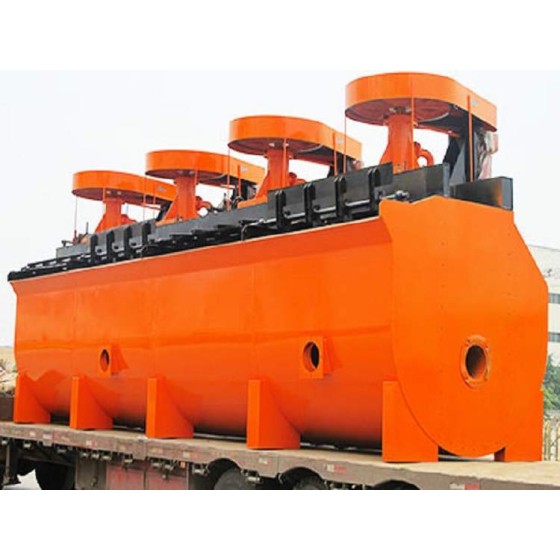
BS-K type flotation machine
XCF-KYF type flotation machine
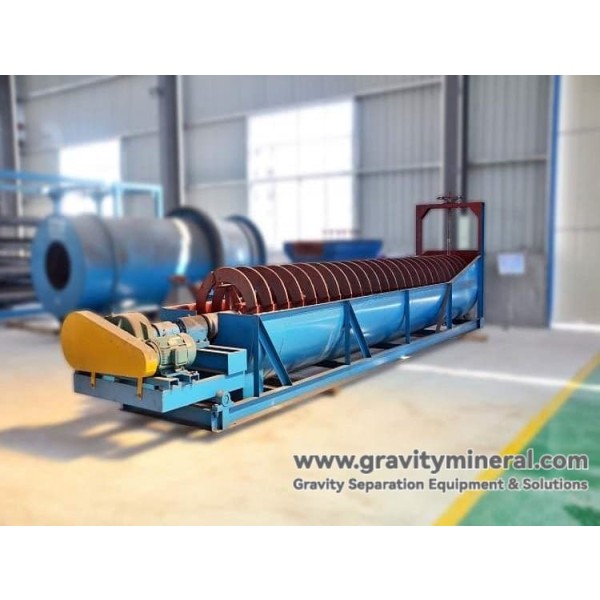
Submersion Type Spiral Classifier

Optimize your closed-circuit grinding with our Spiral Classifier. Available in High Weir and Submersion types for precise ore classification, desliming, and washing.


We provide free proposals and quotes 24/7.

Feel free to contact us via WeChat/WhatsApp: +8619914754015

Submit your inquiry, and we will provide you with a professional solution.

Model: {{ product.model }}
weight: {{ product.weight }} Kilogram

{{ variable.name }} : {{ variable.values[selectedVariantsIndex[variable_index]].name }}

{{ value.name }}
Product Inquiry

High-Efficiency Spiral Classifier Machine for Mineral Processing

The Spiral Classifier is a fundamental piece of grading equipment in any wet mineral processing plant. It is primarily used in conjunction with a Ball Mill to form a closed-circuit grinding system. By utilizing the different settling rates of solid particles in liquid, this machine ensures that only properly ground fine ore moves forward in your circuit, while coarse particles are automatically returned for re-grinding.

We manufacture both the High Weir Spiral Classifier (for coarse grading) and the Submersion Spiral Classifier (for fine grading). Available in single or double-spiral configurations, our classifiers are built to handle massive processing capacities with minimal maintenance.

Beyond closed-circuit grinding, this versatile Ore Classifier is also highly effective for desliming, dewatering, and washing clay-heavy ores prior to gravity separation or flotation.

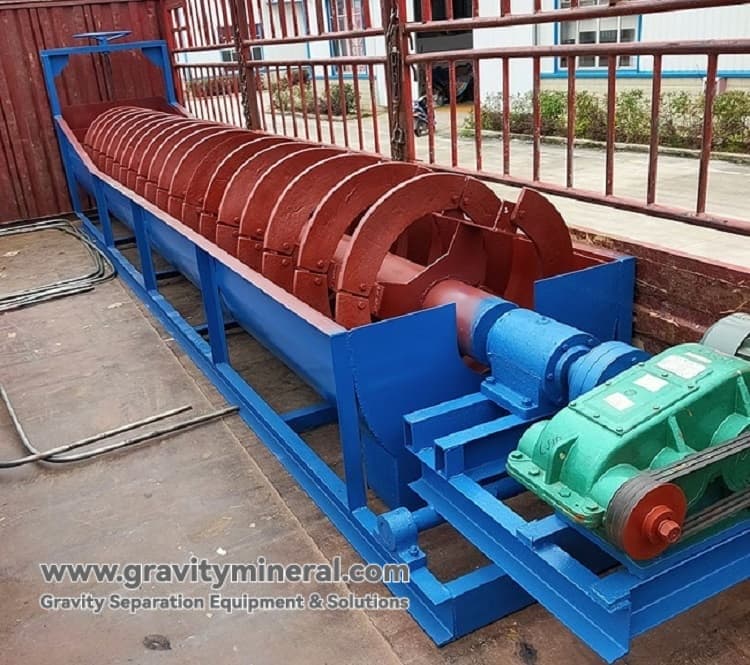
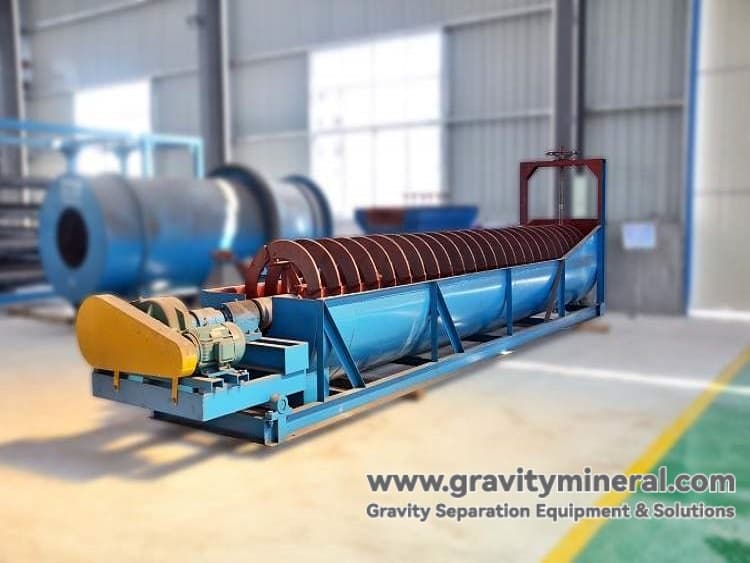
Industrial spiral classifier machine for closed circuit grinding

Core Advantages of Our Spiral Classifier

  • Wear-Resistant Spiral Shoes: The edges of the spiral blades are fitted with replaceable, highly wear-resistant alloy or polyurethane shoes, drastically extending the service life of the continuous rotating mechanism.
  • Adjustable Lifting Device: Equipped with a manual or motorized lifting device at the lower end. This allows operators to lift the spiral assembly out of the slurry during power outages or maintenance, preventing the sand from burying and locking the blades.
  • Heavy-Duty Trough Design: The U-shaped tank is constructed from thickened steel plates and features an inclined design that seamlessly integrates with the discharge height of a standard ball mill.
  • Precise Separation: Offers excellent control over the overflow particle size by simply adjusting the weir height or the rotation speed of the spirals.

How a Spiral Classifier Works

The working principle relies on gravity and specific gravity differences. Larger, heavier rocks sink faster than finer, lighter particles.

  1. Slurry Feeding: The ground slurry from the ball mill is fed into the settling pool located at the lower middle section of the inclined trough.
  2. Particle Settling: Inside the pool, heavy, coarse particles sink to the bottom of the tank, while the properly ground, fine particles remain suspended in the upper layer of the water.
  3. Coarse Sand Return: The slowly rotating spiral blades continuously scoop up the settled coarse particles, pushing them up the incline to the top discharge port, where they slide back into the ball mill for re-grinding.
  4. Fine Overflow: The suspended fine particles flow over the adjustable overflow weir at the bottom end of the tank, moving on to the next stage of mineral processing.

High Weir vs. Submersion Types

We manufacture classifiers tailored to your exact target particle size:

  • High Weir Type (FG Series): The overflow weir is higher than the center of the lower spiral shaft, but the spiral is not fully submerged. Best for: Coarse grading and classifying particles larger than 0.15mm.
  • Submersion Type (FL Series): The spiral blades at the lower end are completely submerged below the liquid level, creating a large, calm settling pool. Best for: Fine grading and classifying very small particles less than 0.15mm.

Scope of Application

  • Closed-Circuit Grinding: Pre-classification and check-classification in ball mill circuits for gold, copper, iron, and tin ores.
  • Desliming & Dewatering: Removing excess clay, slime, and water from ore slurry before gravity separation.
  • Ore Washing: Washing operations for heavy mineral sands and clay-bound ores.

Technical Specifications

Below are standard parameters for reference. We supply both Single Spiral and Double Spiral configurations based on your throughput requirements.

Model (Single/Double) Spiral Diameter (mm) Tank Length (mm) Spiral Speed (r/min) Sand Return (t/h) Motor Power (kW)
FG/FL-750 750 5500 8.5 / 11 15 - 30 4
FG/FL-1000 1000 6500 6.8 / 9 35 - 75 5.5 / 7.5
FG/FL-1200 1200 6500 / 8500 5.8 / 7.3 60 - 130 7.5 / 11
FG/FL-1500 1500 8500 4 / 6 100 - 220 11 / 15
FG/FL-2000 2000 8500 3.6 / 5 180 - 450 15 / 18.5

Frequently Asked Questions (FAQ)

Q1: How do I adjust the classification size (overflow fineness)?

A: The fineness is primarily controlled by adjusting the height of the overflow weir and managing the water volume fed into the settling pool. Higher water volumes or lower weirs generally result in a coarser overflow. You can also adjust the rotation speed of the spiral.

Q2: Why does the spiral classifier have a lifting device?

A: If the power suddenly cuts out while the machine is full of slurry, the heavy sand will rapidly settle and bury the spiral blades. If you try to restart the motor under this heavy load, it could burn out or snap the shaft. The lifting device allows you to winch the spiral out of the sand, start the motor safely, and slowly lower it back down to clear the tank.

High weir double spiral classifier ready for shipment

CONTACT US

To find out more about our products and solutions, please fill out the form below and one of our experts will get back to you shortly.

Nginx server needs to configure pseudo-static rules, click View configuration method