Loading...
Menu
Trending Products
Vibrating Chute
Vibrating Chute
SF type flotation machine
BF type flotation machine
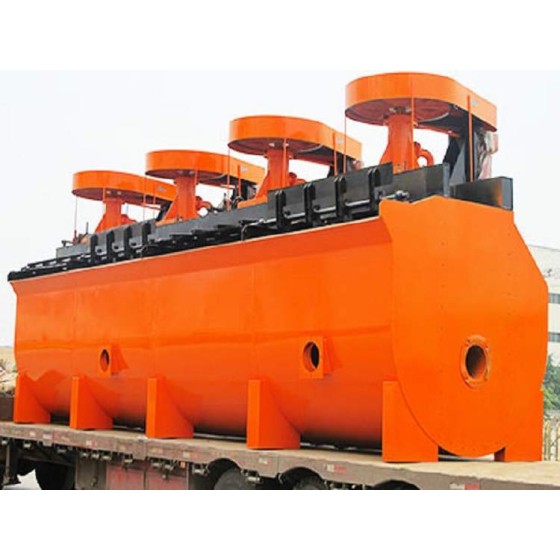
BS-K type flotation machine
XCF-KYF type flotation machine
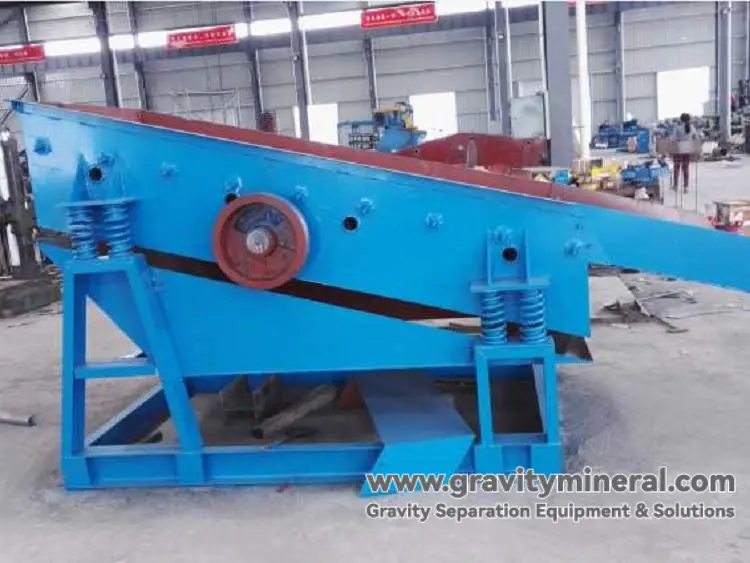
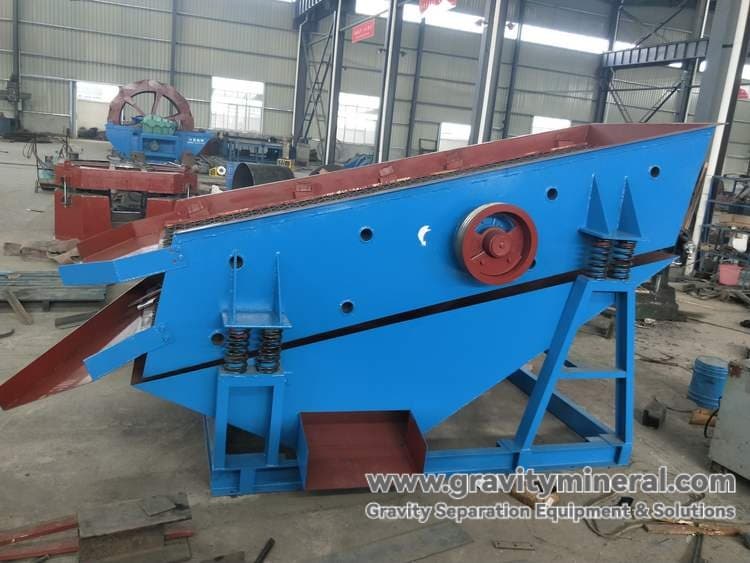
Circular Vibrating Screen

Maximize your screening efficiency with our Circular Vibrating Screen. Ideal for aggregate grading and ore classification. Features multi-deck design and anti-pegging motion.


We provide free proposals and quotes 24/7.

Feel free to contact us via WeChat/WhatsApp: +8619914754015

Submit your inquiry, and we will provide you with a professional solution.

Model: {{ product.model }}
weight: {{ product.weight }} Kilogram

{{ variable.name }} : {{ variable.values[selectedVariantsIndex[variable_index]].name }}

{{ value.name }}
Product Inquiry

High-Capacity Circular Vibrating Screen for Mining and Aggregates

The Circular Vibrating Screen (often referred to as an Inclined Vibrating Screen) is a classic, highly efficient screening machine designed to separate crushed rocks, ores, and aggregates by size. It generates a circular or elliptical vibration trajectory, which provides an excellent throwing angle that prevents material from plugging the screen holes (pegging) while moving it quickly down the deck.

As a core piece of Aggregate Screening Equipment, it is typically positioned after a Jaw Crusher or Cone Crusher. It classifies the crushed output into multiple commercial sizes simultaneously, returning oversized rocks back to the crushers to form a closed-circuit crushing plant.

Built with a heavy-duty riveted frame, external eccentric shaft exciters, and premium vibration-damping springs, our Mining Vibrating Screen delivers massive processing capacity, accurate grading, and a long service life with minimal maintenance.

Core Advantages of Our Rock Screen Machine

  • High-Efficiency Circular Motion: The elliptical/circular vibration trajectory forcefully tosses the material upward and forward. This stratifies the material bed quickly, allowing fine particles to pass through the mesh while keeping near-size rocks from wedging in the holes.
  • Multi-Deck Configuration: Available in 2, 3, or 4-deck configurations. A single machine can accurately classify raw material into 3 to 5 distinct final product sizes simultaneously, drastically reducing plant footprint.
  • Durable Riveted Frame: The main screen box is assembled using cold-riveted Huck bolts instead of welding. This eliminates internal welding stress and increases the fatigue strength of the frame by 50%, guaranteeing over 10 years of reliable operation.
  • Adjustable Amplitude: Features a block-type eccentric exciter. Operators can easily adjust the counterweights to change the vibration amplitude (3-8mm) based on the specific weight and moisture of the ore.

How a Circular Vibrating Screen Works

The screen box is mounted on heavy-duty springs at a downward angle (usually 15° to 20°).

  1. Vibration Generation: The electric motor drives the eccentric shaft or block exciter via a V-belt, forcing the entire screen box to vibrate in a continuous circular motion.
  2. Material Stratification: As material feeds onto the upper deck, the intense vibration causes larger rocks to rise to the top of the material bed, while finer particles sift down to the bottom.
  3. Sizing & Discharge: Particles smaller than the mesh aperture fall through to the lower deck. The oversized material bounces forward along the inclined screen surface and discharges out the front chute.

Industry Applications

Because of its high throughput, this screen is an absolute necessity in:

  • Aggregate Production: Grading crushed stone, gravel, and manufactured sand into specific commercial sizes (e.g., 0-5mm, 5-10mm, 10-20mm).
  • Hard Rock Mining: Pre-screening ore before it enters secondary crushers to prevent crusher overload, or classifying closed-circuit grinding output.
  • Coal Processing: Dry screening of raw lump coal and separating coal gangue.

Technical Specifications (YK Series)

We offer the YK series screens with various deck options (2YK for double deck, 3YK for triple deck, 4YK for quad deck). Below are the standard specifications for our 3-deck and 4-deck models. We can customize the screen mesh (Polyurethane, Manganese woven wire, or Punched steel) to suit your material.

Model Screen Decks Aperture Size (mm) Max Feed Size (mm) Capacity (t/h) Motor Power (kW)
3YK1230 3 3 - 50 < 200 12 - 120 5.5
3YK1336 3 6 - 50 < 200 15 - 160 11
3YK1548 3 5 - 80 < 200 50 - 250 15
3YK1848 3 5 - 80 < 200 50 - 300 18.5
3YK1860 3 5 - 80 < 200 50 - 350 22
3YK2160 3 5 - 100 < 200 100 - 500 30
3YK2460 3 5 - 150 < 200 150 - 700 30
3YK2770 3 5 - 150 < 200 200 - 800 30*2
4YK1548 4 5 - 80 < 200 50 - 250 18.5
4YK1848 4 5 - 80 < 200 50 - 300 22
4YK1860 4 5 - 80 < 200 50 - 350 22
4YK2160 4 5 - 100 < 200 100 - 500 30
4YK2460 4 5 - 150 < 200 150 - 700 37
4YK2770 4 5 - 150 < 200 200 - 800 30*2

Frequently Asked Questions (FAQ)

Q1: What is the difference between a Circular Vibrating Screen and a Linear Vibrating Screen?

A: A Circular (Inclined) Vibrating Screen uses an elliptical motion and relies on gravity (a downward incline) to move material quickly. It is best for high-capacity, coarse-to-medium dry screening. A Linear Vibrating Screen uses a straight-line motion and sits horizontally. It is better for fine screening, dewatering, and handling wet/sticky materials.

Q2: Why use Huck bolts (rivets) instead of welding the frame?

A: Vibrating screens endure massive, constant dynamic forces. If the side plates are welded, the heat causes internal stress points which eventually crack under vibration. Cold-riveting ensures the frame can flex slightly and absorb the vibration without cracking, vastly extending the machine's life.

Inclined vibrating screen operating at a large scale quarry Vibrating screen factory assembly showing heavy duty suspension springs

CONTACT US

To find out more about our products and solutions, please fill out the form below and one of our experts will get back to you shortly.

Nginx server needs to configure pseudo-static rules, click View configuration method