Loading...
Menu
Trending Products
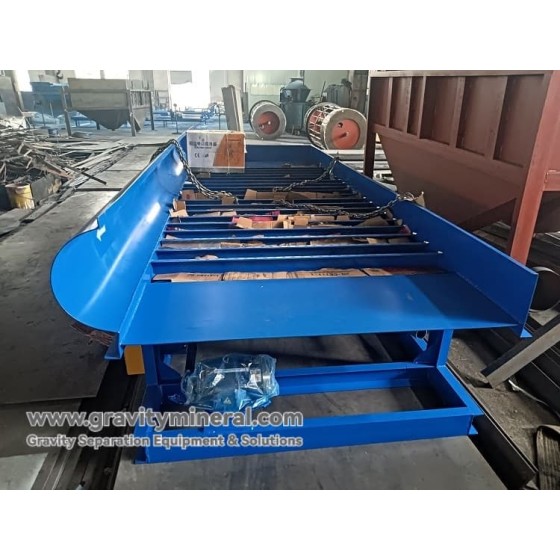
Vibrating Chute
Vibrating Chute
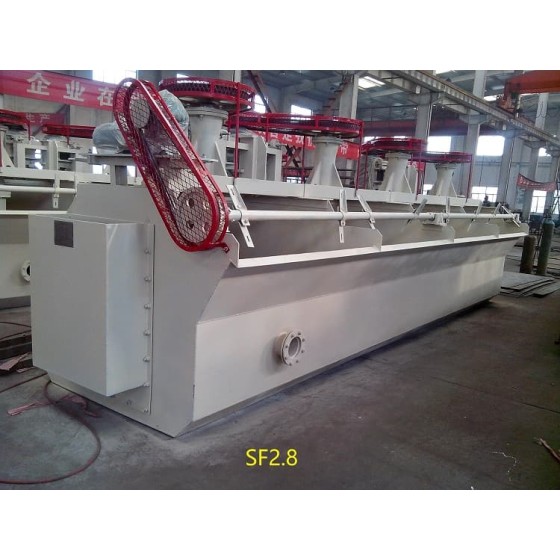
SF type flotation machine
BF type flotation machine
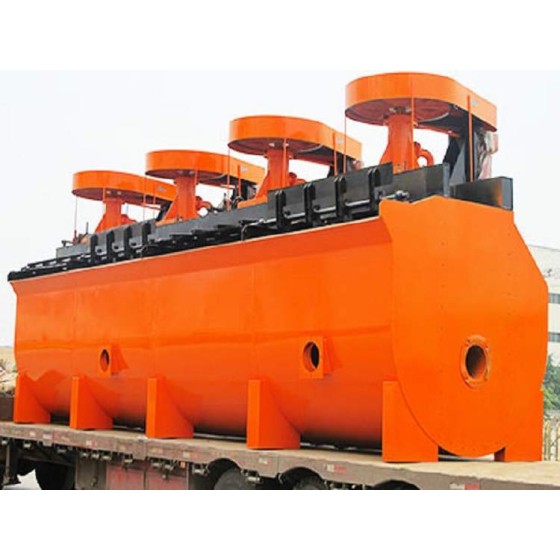
BS-K type flotation machine
XCF-KYF type flotation machine

High Tension Electrostatic separator

Separate minerals by electrical conductivity with our High Tension Electrostatic Separator. Essential for upgrading Zircon, Rutile, Monazite, and Cassiterite.


We provide free proposals and quotes within 24 hours.

Contact us via WeChat/WhatsApp: +8619914754015

After submitting your inquiry, our professional engineers will provide you with a specialized technical solution.

Model: {{ product.model }}
weight: {{ product.weight }} Kilogram

{{ variable.name }} : {{ variable.values[selectedVariantsIndex[variable_index]].name }}

{{ value.name }}
Product Inquiry

High Tension Electrostatic Separator for Heavy Minerals

The High Tension Electrostatic Separator (DXJ Series) is a highly advanced sorting machine designed for the final stage of heavy mineral purification. When gravity and magnetic separation are no longer effective—because the remaining minerals have similar densities and are non-magnetic—this equipment takes over by separating minerals based entirely on their electrical conductivity.

This Electrostatic Mineral Separator is the absolute industry standard for separating Rutile (conductor) from Zircon (non-conductor), as well as processing Cassiterite (Tin), Scheelite (Tungsten), Monazite, and Gold. By utilizing a high-voltage corona electric field combined with a static electric field, it achieves exceptionally high sorting precision.

Equipped with an intelligent dual-heating system (infrared pre-heating and drum heating), our High Voltage Electrostatic Separator ensures the ore is completely moisture-free, which is critical for successful electrostatic conductivity separation.

High tension electrostatic separator machine for zircon and rutile sorting

Core Technology & System Advantages

  • Compound Electric Field: Uses both a corona electric field (to charge the minerals) and a static electrostatic field (to attract/repel them). This dual-field design increases the recovery rate of conductive minerals by 15-20% compared to older single-field machines.
  • Intelligent Temperature Control: Moisture kills electrostatic separation. This machine features an infrared heating hopper (12-22kW) and an internally heated rotating drum (1kW) to bake the minerals to 150-250℃. The temperature control is accurate to ± 2℃.
  • High-Voltage Safety: Powered by an oil-immersed transformer producing up to 60kV. The system includes an over-current self-protection circuit and a high-voltage discharge rod for maximum operator safety.
  • Modular Configurations: Available in configurations ranging from 2 drums to 6 drums, allowing for multi-stage continuous processing capacities of 800 to 2000 kg/h depending on the model.

How Electrostatic Separation Works

The separation process relies on how quickly different minerals lose an electrical charge.

  1. Pre-Heating: The raw mineral sand is fed into the hopper and heated to 150-250℃ to remove all surface moisture.
  2. Charging (Corona Field): The hot sand falls onto the grounded rotating drum. A high-voltage corona wire (up to 60kV) sprays a negative electrical charge onto all the particles.
  3. Conductor Minerals (e.g., Rutile, Ilmenite): Good conductors immediately pass their negative charge into the grounded drum. Losing their charge, they are simply thrown forward off the drum by centrifugal force into the Front Hopper.
  4. Non-Conductor Minerals (e.g., Zircon, Quartz): Poor conductors trap the negative charge. Because the drum is positively grounded, the negative particles are "pinned" (stuck) to the drum by mirror adsorption. They ride the drum around to the back, where a mechanical brush sweeps them off into the Rear Hopper.
  5. Middlings (Semiconductors): Particles with intermediate properties fall into a Middle Hopper and are usually recirculated.
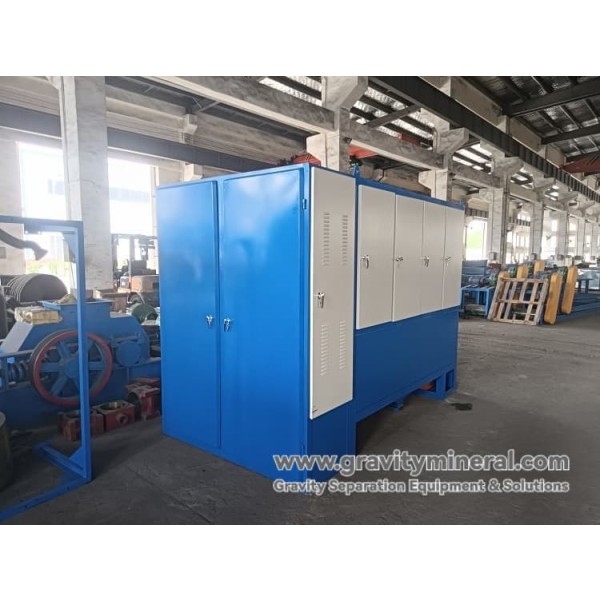
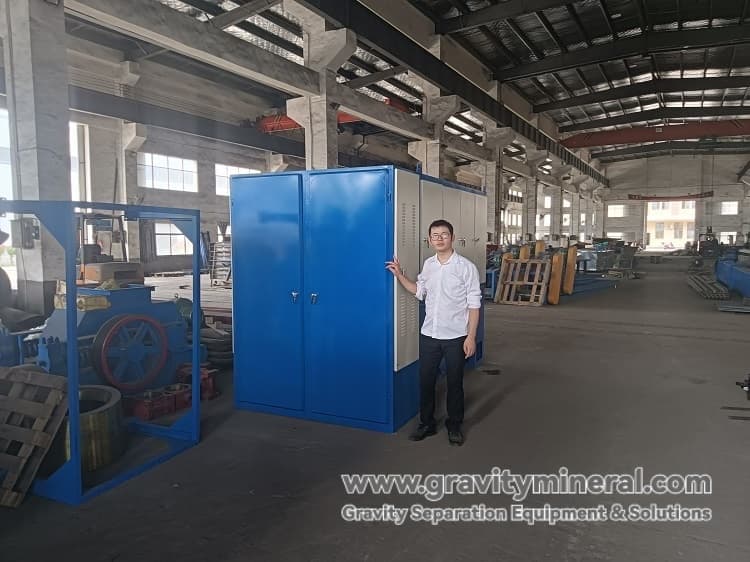
High voltage electrostatic separator control panel and heating system

Technical Specifications & Maintenance

Component / Specification Technical Details
Operating Voltage 0 to 60 kV (Adjustable via Silicon Rectifier Cabinet)
Applicable Particle Size 0.053 mm to 0.833 mm (20 to 280 mesh)
Rotary Drum Dimensions Φ220 - 320 mm × Length: 1500 / 2000 mm
Drum Speed Control 40 - 140 rpm (AC Stepless Variable Speed)
Corona Electrode Φ0.32 mm Nickel-Chromium resistance wire
Static Electrode Φ30 - 35 mm Stainless Steel Tube (Adjustable Angle)
Electrode Spacing 30 - 80 mm (Adjustable distance to drum)

Frequently Asked Questions & Safety

Q1: What are the primary safety rules for operating this machine?

A: This machine generates lethal high voltage (60kV). Rule 1: It is strictly forbidden to open the doors of the sorting room while the machine is powered on. Rule 2: After shutting off the power, you MUST use the provided high-voltage discharge rod to contact the electrode for 2-3 seconds to discharge residual electricity before performing any maintenance.

Q2: What maintenance is required for the separation mechanisms?

A: Check the Nickel-Chromium corona wire every shift to ensure it is tight and unbroken (it typically needs replacing every 6-8 months). Inspect the mechanical wool felt brush weekly; the bristle height must remain ≥5mm to effectively sweep the non-conductors off the drum. The brush usually requires replacement every 3-4 months.

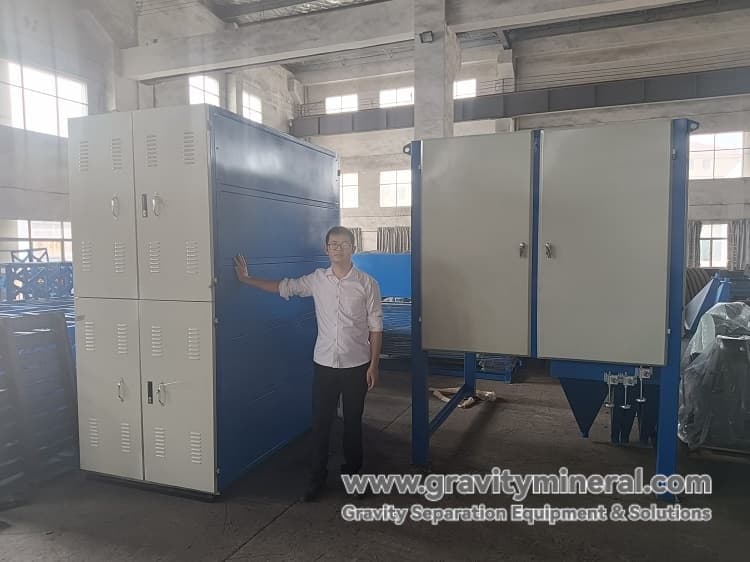
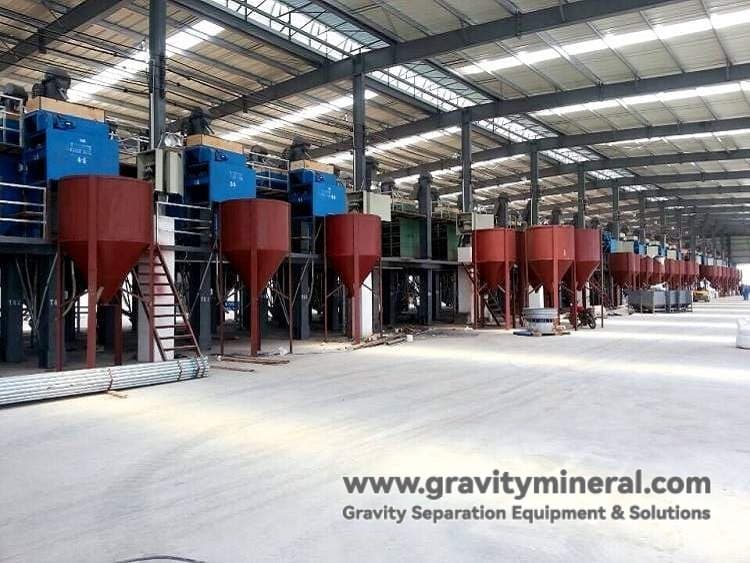
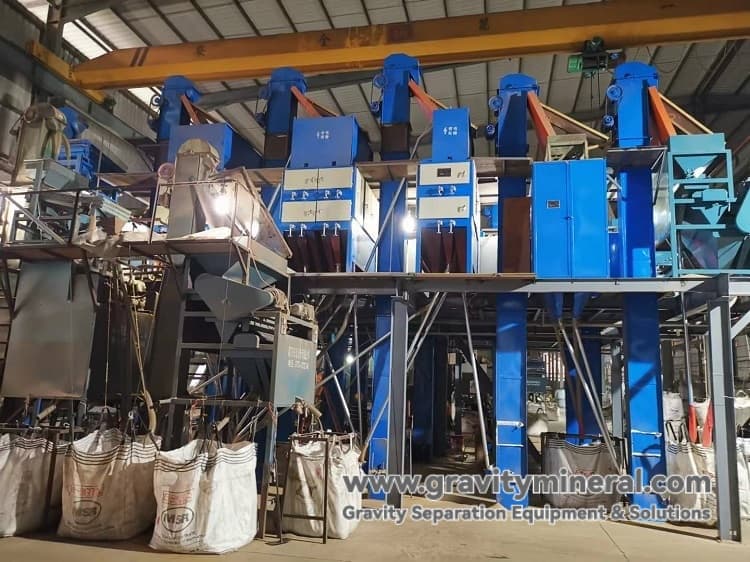
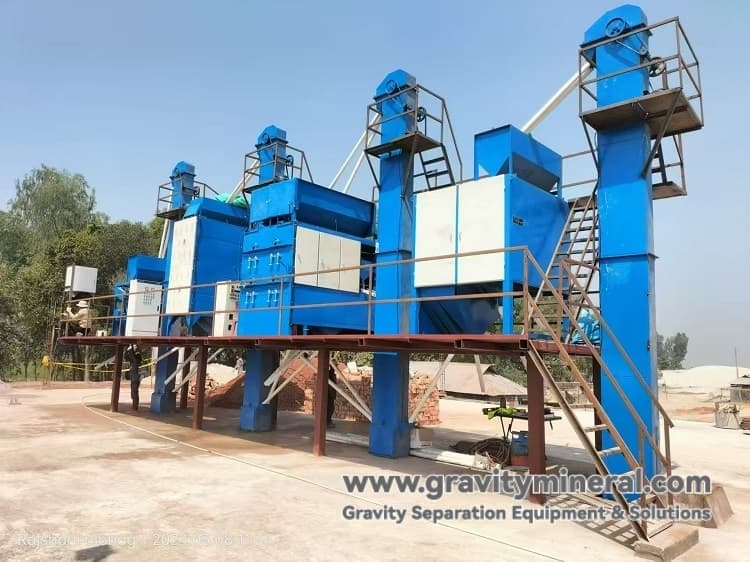
Four drum electrostatic mineral separator factory assembly Corona wire and static electrode assembly inside electrostatic separator High tension electrostatic separation plant for heavy mineral sands Zircon and rutile separation processing using high voltage electrostatic equipment

CONTACT US

To find out more about our products and solutions, please fill out the form below and one of our experts will get back to you shortly.

Nginx server needs to configure pseudo-static rules, click View configuration method