Antimony Ore Beneficiation Solutions (Gravity + Flotation Process)
Antimony is a critical strategic metal mineral globally, and the selection of its beneficiation process directly determines resource utilization rates and economic profitability. Our Antimony Ore Beneficiation Solution adopts the industry-proven "Gravity-Flotation Combined Process" route.
By leveraging the respective strengths of gravity separation (for coarse particles) and froth flotation (for fine slimes), we achieve the highly efficient recovery of antimony ores with varying embedded particle sizes and mineral types—primarily targeting Stibnite (antimony sulfide) but also capturing challenging antimony oxide ores. This turnkey solution is characterized by its flexible flowsheet, exceptionally high recovery rate, economic operational costs, and environmentally friendly design, making it ideal for both single antimony deposits and polymetallic complex ores.
Detailed Core Process Flow
Our engineering design strictly adheres to the metallurgical principles of "collect as early as possible, discard as early as possible" and "stage grinding, stage separation" to maximize your return on investment.
Stage 1: Crushing, Screening & Pre-Enrichment
Purpose: To crush the raw ore to a suitable sorting size and pre-discard waste rock to drastically reduce the load on downstream milling operations.
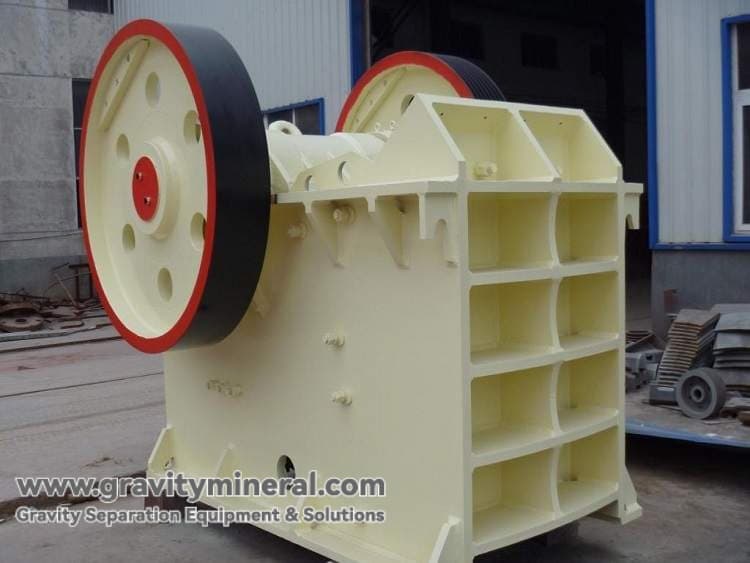
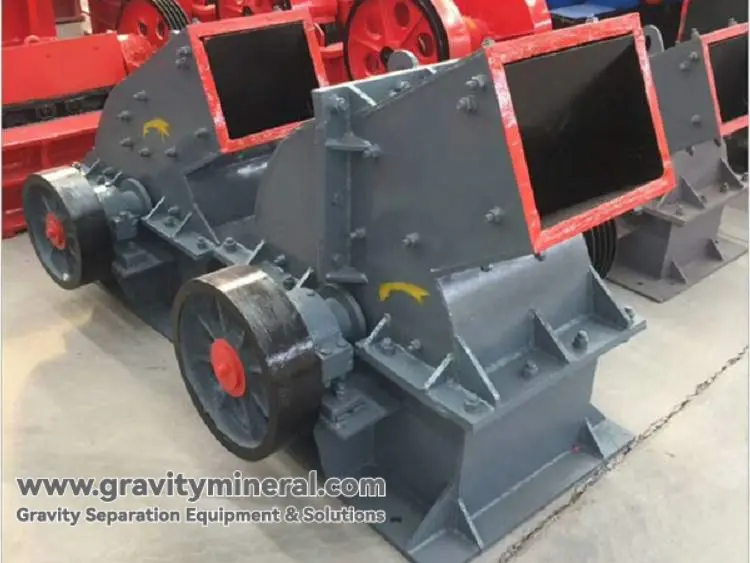
- Crushing: Raw ore undergoes two or three stages of crushing using a Jaw Crusher (coarse) and Cone Crusher (medium/fine) to control the particle size to strictly below -30mm.
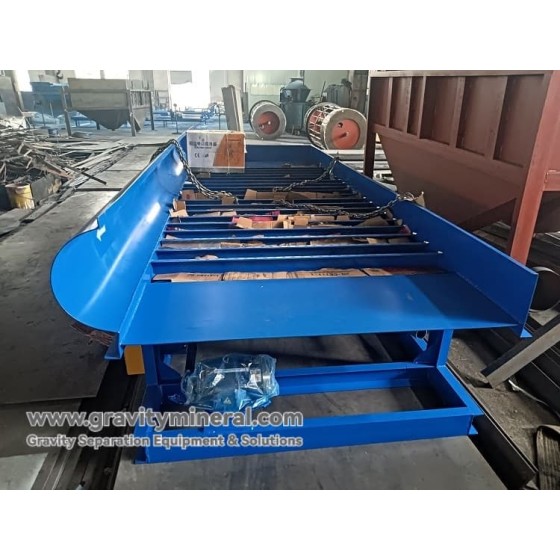
- Screening: A Vibrating Screen classifies the crushed product into distinct fractions (e.g., 8-30mm, 2-8mm, 0-2mm) to prepare for precise gravity separation.
- Hand-Sorting (Optional): For ores featuring extremely coarse, high-grade lumps, a manual hand-picking belt can be installed after the fine crushing stage. Workers can pick out high-grade antimony lumps to be sold directly as a finished product, generating immediate revenue.
Stage 2: Gravity Separation System
Purpose: Utilizing the significant density difference between stibnite and gangue, this stage pre-enriches the ore to yield high-grade concentrates instantly. This is the key to reducing flotation costs and increasing total recovery.
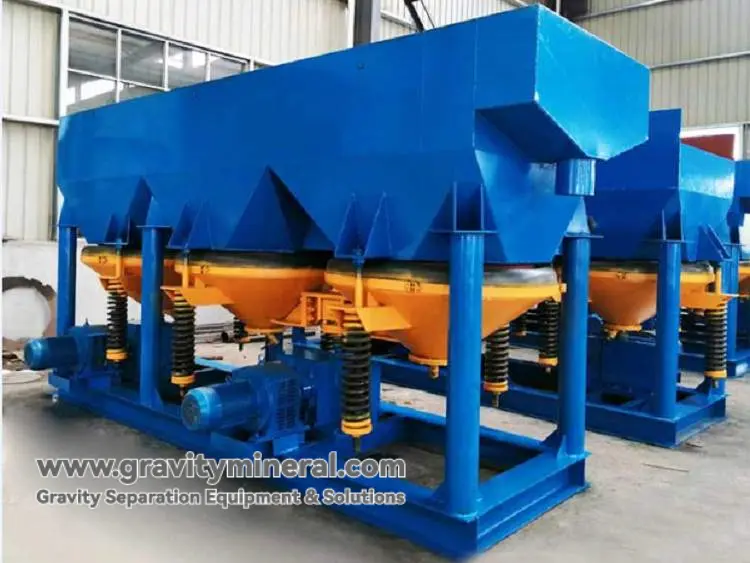
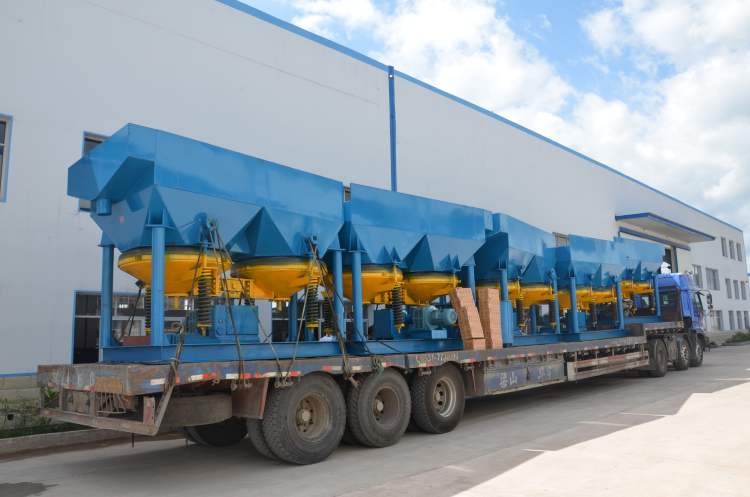
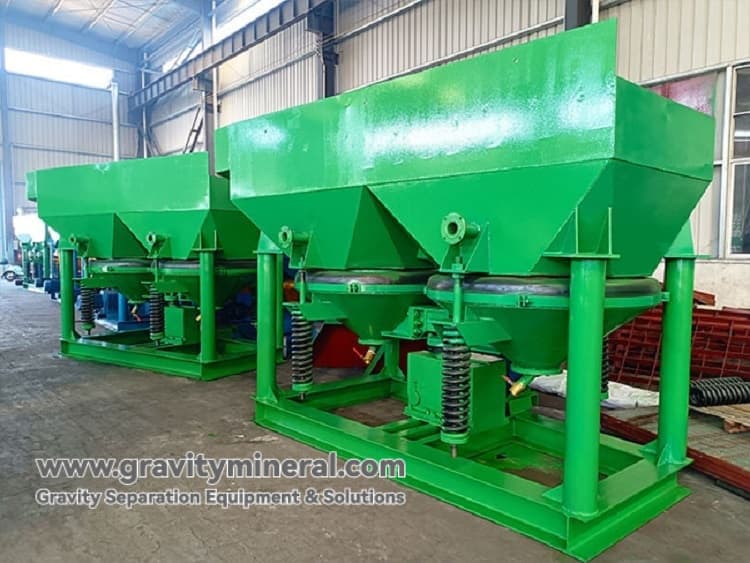
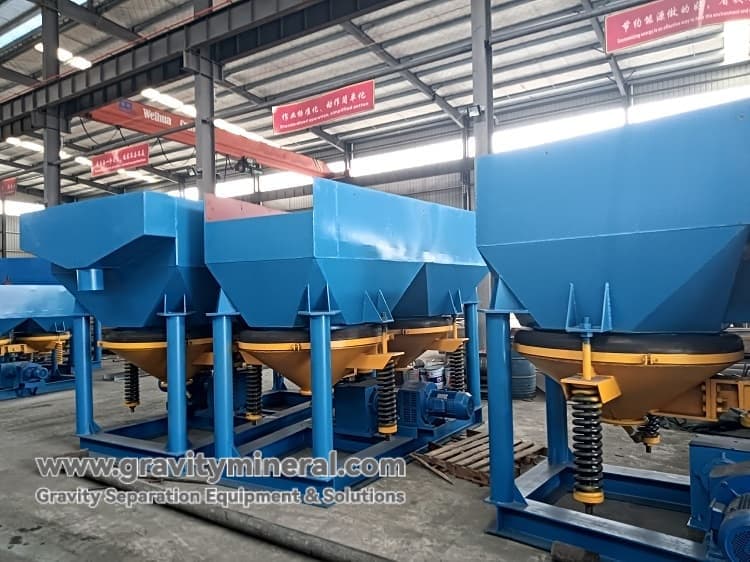
Process: The classified materials are fed into specifically sized Mineral Jiggers:
- Coarse Grade (8-30mm): Fed into a Large Particle Jigger.
- Medium Grade (2-8mm): Fed into a Standard Diaphragm Jigger.
- Fine Grade (0-2mm): Fed into a Sawtooth Wave Jigger, which features hydrodynamic pulsations perfectly suited for fine-particle sorting.
Output: The gravity concentrates from the jigs are combined as a final commercial product. The jigging tailings are then routed to the flotation system.
Stage 3: Flotation System
Purpose: To recover the fine-grained and complex embedded antimony minerals that gravity separation cannot capture. This ensures high overall grade and recovery.
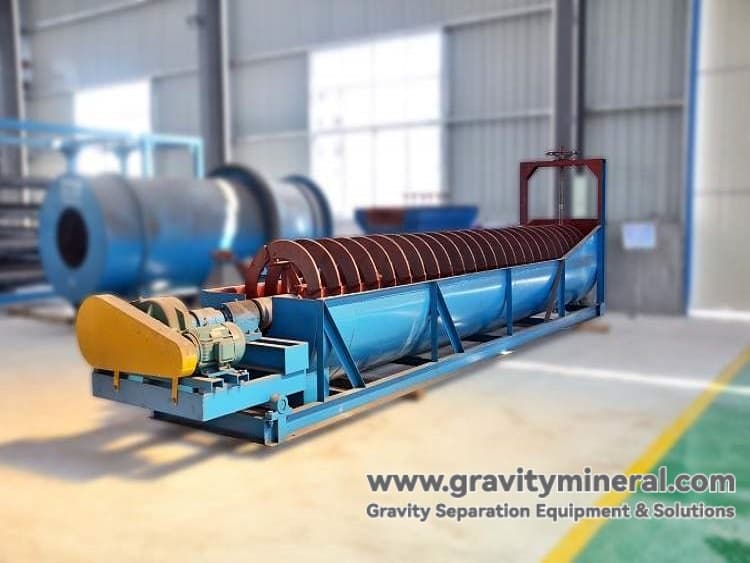
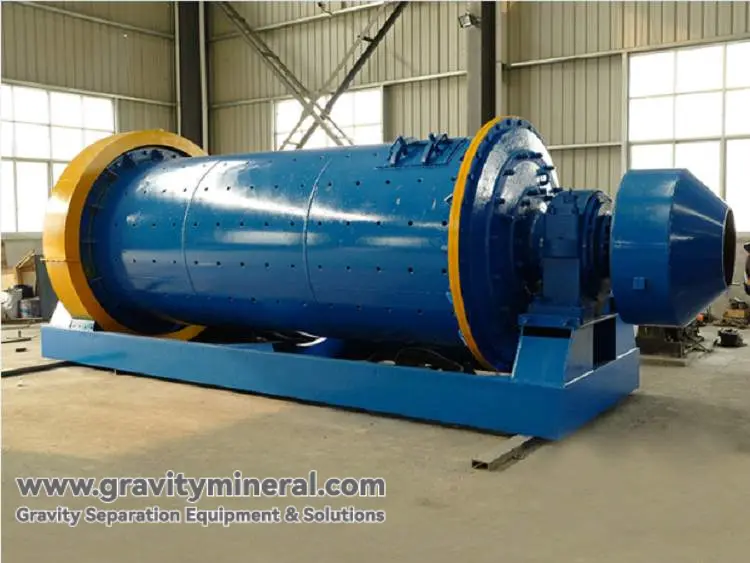
- Grinding: Gravity tailings enter a Ball Mill closed-circuit with a Spiral Classifier (or Hydrocyclone) to achieve full dissociation. Flotation feed size is usually controlled to 60%-80% passing -0.074mm.
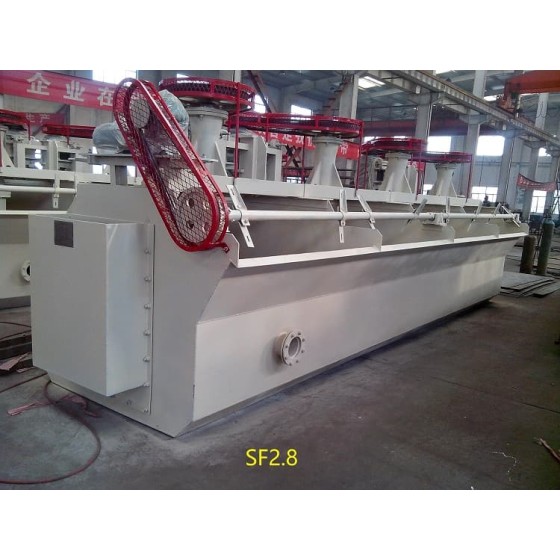
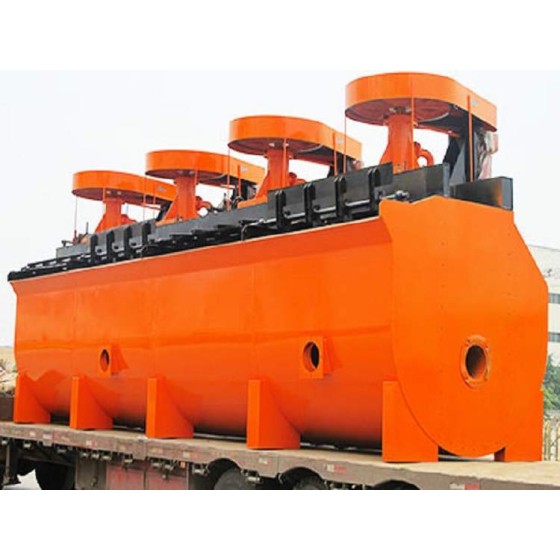
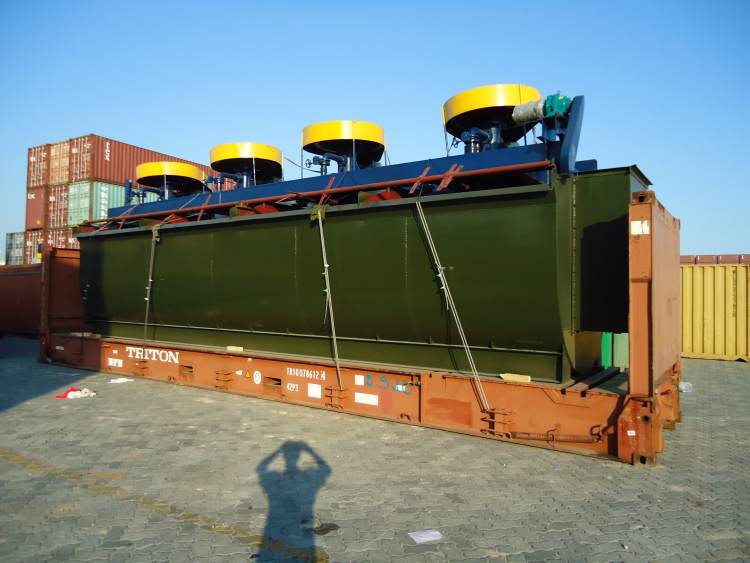
- Flotation Circuit: Adopts the classic "One Roughing, Three Cleaning, Two Sweeping" process. Roughing quickly captures free minerals; Cleaning (repeated) strips away impurities to guarantee a high final grade (55%-60%); Sweeping maximizes recovery from tailings.
- Shaking Table Sweeping (Optional): Antimony oxide ore does not respond well to standard flotation. Additional Shaking Tables can be installed to process the flotation tailings and physically scavenge the heavy oxide particles.
Stage 4: Product Processing & Water Management
- Concentrate Dewatering: Both gravity and flotation concentrates enter a Thickener for preliminary dewatering, followed by a Vacuum Disc Filter (or Ceramic Filter) to produce a dry concentrate (<15% moisture) that is easy to transport.
- Tailings & Environmental Treatment: Tailings are stored safely. Overflow fresh water from the thickener and tailing pond is actively recycled back into the plant, achieving zero-discharge, environmentally friendly production.
Core Equipment Configuration List
| Process Link |
Main Equipment |
Technical Characteristics & Role |
| Crushing & Screening |
Jaw Crusher, Cone Crusher, Vibrating Screen |
Heavy-duty design, high capacity, high classification efficiency. |
| Gravity (Core) |
Large Particle Jigger |
Handles coarse-grained (8-30mm) ore and produces concentrate ahead of schedule. |
| Gravity (Core) |
Standard Jigger |
Processes medium grain sizes (2-8mm), essential for high recovery rates. |
| Gravity (Core) |
Sawtooth Wave Jigger |
Processes fine-grained (0-2mm) ore. Energy-saving and highly efficient. |
| Grinding & Classifying |
Ball Mill, Spiral Classifier / Hydrocyclone |
Dissociates mineral monomers and strictly controls flotation feed size. |
| Flotation |
Mechanical Agitation Flotation Machine |
High aeration capacity, low energy consumption, high sorting efficiency. |
| Dewatering |
High-Efficiency Thickener, Disc Vacuum Filter |
Rapidly reduces the moisture of the concentrate for easy transport. |
| Auxiliary |
Slurry Pumps, Dosing Machines, Mixing Drums |
Ensures a smooth, automated, and stable plant flow. |
Technical Advantages & Characteristics
- Extremely High Comprehensive Recovery Rate: Gravity separation pre-recovers dissociated coarse grains, while flotation accurately captures complex embedded fine grains. Operating in parallel, they push the comprehensive recovery rate above 85%.
- Remarkable Economic Benefits:
- Low-Cost Output: Producing gravity concentrate early means no chemical or grinding costs for that portion of the ore, significantly reducing the cost-per-ton of processing.
- High-Grade Products: The rigorous multi-stage flotation cleaning circuit stably produces premium antimony concentrate at Sb ≥ 55%, commanding high market added value.
- Strong Adaptability: The process is flexible. Capacity and parameters for both the gravity and flotation circuits can be easily adjusted based on ore properties (e.g., oxidation rate, symbiotic relationships).
- Green & Environmental Protection: Gravity separation uses zero chemicals. Gravity pre-enrichment reduces the volume of chemicals needed in flotation. A high proportion of water is reused, minimizing wastewater discharge.
Typical Technical & Economic Indicators
| Item |
Target Indicator |
| Processing Capacity |
50 - 1000 tons/day (Fully Customizable) |
| Raw Ore Grade (Sb) |
1.5% - 4.0% |
| Final Concentrate Grade (Sb) |
≥ 55% |
| Comprehensive Recovery |
85% - 90% |
| Unit Water Consumption (After Recycling) |
≤ 1.8 m³/t |
| Flotation Chemicals Cost |
Depends on the nature of the ore (Minimized by gravity pre-enrichment) |
Frequently Asked Questions (FAQ) About Antimony Processing
Q1: Why combine Gravity and Flotation instead of just using Flotation?
A: Flotation is highly effective, but it requires grinding the rock into fine powder, which consumes massive amounts of electricity and expensive chemical reagents. By running the crushed ore through Gravity Jigs first, we can instantly extract the large, high-grade antimony lumps and throw away tons of barren rock. This means the expensive ball mills and flotation cells only have to process a fraction of the total volume, drastically lowering your Operational Expenditure (OPEX).
Q2: Can Flotation recover Antimony Oxide Ore?
A: No. Standard sulfide flotation chemicals do not easily attach to oxidized antimony. If a deposit has a high oxidation rate, the oxide minerals will sink into the flotation tailings. This is why our flowsheet includes optional Shaking Tables at the end of the circuit—they act as scavengers to mechanically catch the heavy oxide particles that the bubbles left behind.
Full-Cycle Technical Service & Support (EPC)
The Gravity-Flotation combined process is the most classic and reliable solution for Antimony ores, especially pyroxene-based (stibnite) ores. We provide full value-chain services from "ore sample" to "concentrate":
- Selectivity Testing: Detailed process mineralogical analysis and batch testing to determine the optimal flowsheet.
- Customized Design: "One mine, one strategy" plant design and non-standard equipment customization.
- Equipment Supply & Integration: High-performance manufacturing and system integration.
- Intelligent Control (Optional): Automation control systems to realize stable production and energy reduction.
- Operation Support: Installation guidance, operator training, and long-term maintenance support.
Through rigorous testing and customized design, we ensure your Antimony project achieves maximum return on investment.